
Contract Warehousing vs. Public Warehousing: Which is Right for Your Business?
Oct 4, 2026
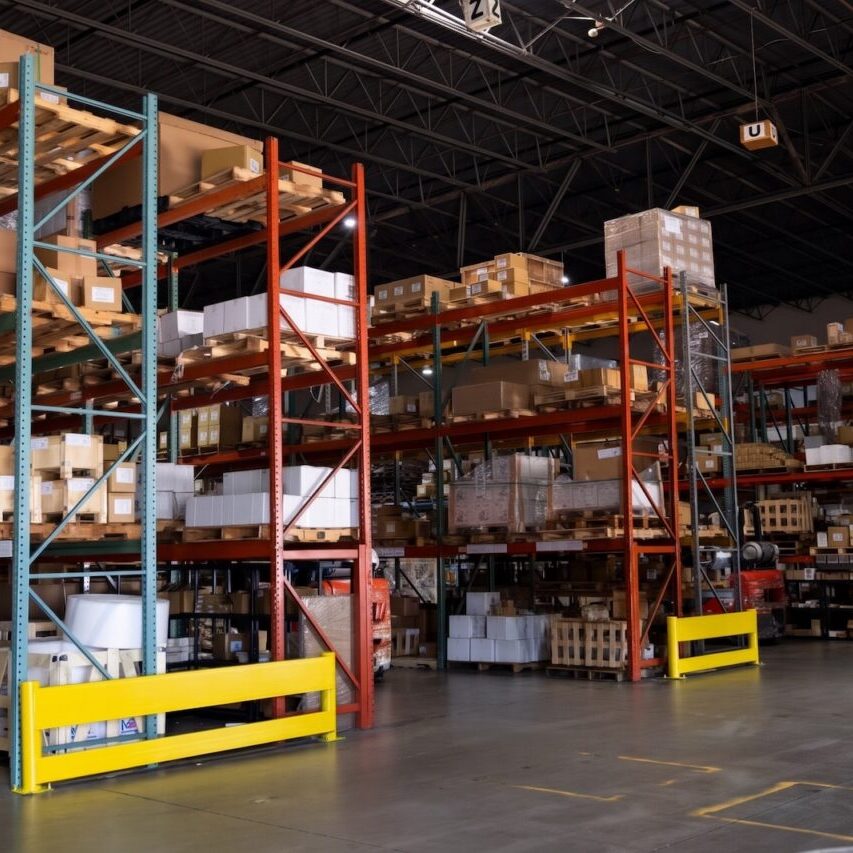
Most of the businesses that call us about warehousing already know they need outside space. The harder question is what kind of arrangement to sign. Lock in a contract warehousing agreement and you get guaranteed capacity and an operation built around your product. Go with public warehousing and you keep your options open, but you share the building, the docks and the crew with everyone else.
Neither one wins across the board. We run both models out of our Atlanta facility, and we’ve seen companies pay for picking the wrong one for where their business actually is. Below, we break down how contract and public warehousing differ, what each one really costs, and how to tell which fits your volume right now.
What Is Contract Warehousing?
Contract warehousing is a long-term agreement where a 3PL commits a defined amount of space, labor and equipment to your inventory at a negotiated rate. The scope of work, service levels and pricing are written into the contract, typically for multiple years, so you get guaranteed capacity and predictable costs without owning a building.
On our side of the dock, contract warehousing usually goes by another name: dedicated warehousing. The space is reserved for you whether it’s half full on a slow Tuesday in March or packed to the rafters in November.
Because the relationship is built to last, the processes get built around your product too. Receiving rules, slotting, pick paths, kitting steps, labeling requirements, reporting. All of it gets set up once and run the same way every day by people who know your SKUs. When the scope is spelled out up front, your invoices look about the same month to month, and nobody is renegotiating every time an extra container shows up.
What Is Public Warehousing?
Public warehousing is shared, multi-client warehouse space you rent as needed, usually billed monthly by the pallet or square foot, with handling charged as pallets come in and go out. There’s little or no long-term commitment, which makes it a good fit for overflow, seasonal spikes and testing a new market.
We call this shared warehousing. You’re in the same facility as other customers, using the same docks, forklifts and labor pool, and you pay for what you actually use. That’s a real advantage when your volume is hard to predict.
The tradeoff is control. Space in a public warehouse is generally first come, first served, so availability can get tight right when everyone else is busy too. Handling tends to be standard pallet in, pallet out, and anything beyond that is set up case by case rather than designed into the operation from day one.
What’s the Difference Between Contract and Public Warehousing?
The main difference is commitment. Contract warehousing trades flexibility for guaranteed space, custom processes and predictable costs under a multi-year agreement. Public warehousing trades those guarantees for flexibility, with shared space, standard handling and pay-as-you-go billing. Contract fits steady, complex operations. Public fits variable or short-term storage needs.
When Does Contract Warehousing Make Sense?
Contract warehousing makes sense when your volume is predictable, your product needs specific handling, and you’d rather have guaranteed capacity than flexibility. It’s the stronger choice for established operations with consistent throughput, multi-step fulfillment or kitting, strict customer delivery requirements, or inventory that can’t afford to wait on space.
A few signs you’re ready for a contract warehousing arrangement:
- Your inventory stays within a fairly tight range most of the year
- Your customers hold you to delivery windows, labeling specs or routing guides, and a miss costs you money
- You need work done beyond storage, like pick and pack, sub assembly and kitting, or quality checks
- You’ve outgrown a shared setup and keep running into dock or labor conflicts
- You’re feeding a production line or retail network on a tight schedule
- You want a predictable line item for budgeting instead of a bill that moves every month
That production line point is a big one for manufacturers. If you’re running J.I.T. inbound logistics, a late delivery can stop the line. That’s exactly the kind of operation where guaranteed space and a team that knows your parts by heart is worth the commitment.
When is Public Warehousing the Better Choice?
Public warehousing is the better choice when your volume swings hard, your storage need is temporary, or you aren’t ready to commit to a multi-year deal. It works well for seasonal inventory, overflow from your own facility, import surges, product launches, and testing demand in a new region before investing in dedicated space.
Public warehousing tends to fit when you’re dealing with:
- Seasonal peaks that would leave contracted space sitting empty half the year
- Overflow storage when your own warehouse runs out of room
- Imports arriving in waves, where a batch of containers needs a home for a few weeks
- A new Southeast market you want to test before committing
- Volume that’s still too early to forecast with any confidence
- Simple storage needs: pallets in, pallets out, minimal handling
Import surges come up a lot for us. Atlanta sits within easy reach of the Ports of Savannah, Charleston, Jacksonville and Mobile, and plenty of companies need somewhere to put a container surge without signing up for space they’ll only fill a few months a year. Shared space handles that without locking you in.
Can You Use Both Contract and Public Warehousing?
Yes, and a lot of businesses should. A common setup is dedicated contract space for your core, steady-moving inventory, with shared public space absorbing seasonal peaks and overflow. You contract for your baseline instead of your peak, so you aren’t paying all year for capacity you only need a few months out of it.
This is where working with one provider that offers both models pays off. When dedicated and shared space sit under the same roof, overflow doesn’t mean a second vendor, a second contract and a truck shuttling pallets across town. Your inventory stays in one system, one team knows your product, and shifting between models as your business changes is a conversation instead of a relocation.
It also gives you a cleaner path to grow. Start in shared space, build up a year of real volume data, then move into a dedicated arrangement once your baseline is clear. Signing a contract with real numbers in hand beats signing one on a forecast.
What Should You Ask Before Signing a Contract Warehousing Agreement?
If you’re leaning toward a contract, the agreement deserves as much scrutiny as the building. Before you sign, get straight answers to these:
- What’s the minimum commitment, and what happens if I fall short of it?
- How much can my volume move before rates get renegotiated?
- Where does my overflow go during peak season, and what does it cost?
- Which services are included in the base rate, and which are billed separately?
- Can I see my inventory and orders in real time, or do I have to call someone?
- How are performance standards measured and reported, and what happens when they’re missed?
- What does it take to scale down or exit early?
For a broader checklist, our guide to choosing a warehousing and distribution partner covers what to look for beyond the contract itself.
Contract and Shared Warehousing in Atlanta With Total Warehousing
Total Warehousing has been running warehouse operations in Atlanta since 1942. Today that’s more than 600,000 square feet of storage capacity, with both dedicated and shared warehousing available, so choosing between contract and public space doesn’t have to be all or nothing.
Whichever model fits, the same services sit on top of it: inventory management, order fulfillment, pick and pack, cross docking, J.I.T. inbound logistics, sub assembly and kitting, overflow storage, and value-added services built around how you actually operate. Customers can check inventory and order status anytime through our customer portal, and our memberships with TIA, SWA and IWLA hold us to industry standards that go beyond our own word.
If you’re weighing contract warehousing against a shared setup, send us your volumes and we’ll tell you straight which one makes more sense. Sometimes the answer is a little of both. Request a quote and our team will walk through it with you.